
This guide provides instructions for adding video content to your articles and pages. There are two primary methods: uploading video files directly to your website’s Media Library or embedding content hosted on third-party platforms like YouTube or Vimeo.
Method 1: Direct Video Uploads
You can now upload video files directly to your WordPress Media Library. This is ideal for short clips, breaking news, or local highlights that you wish to host natively on your site.
Technical Requirements and Constraints
To ensure optimal performance and compatibility, please adhere to the following specifications:
- Maximum File Size: 256MB.
- Supported Formats: .mp4, .mov, and .webm.
- Filename Sanitization: Before uploading, you must sanitize your file names to prevent playback errors.
- No special characters: Do not use symbols like
/,?,#,!, or@. - No spaces: Replace all spaces with dashes (
-) or underscores (_). - Example: Rename "high school game.mp4" to "high-school-game.mp4".
- No special characters: Do not use symbols like
How to Insert a Direct Upload
- Open the article or page editor.
- Add a new block and search for the Video block.
- Select Upload to bring a new file from your device, or Media Library to select a previously uploaded clip.
- Once selected, the video will be embedded directly into your content.
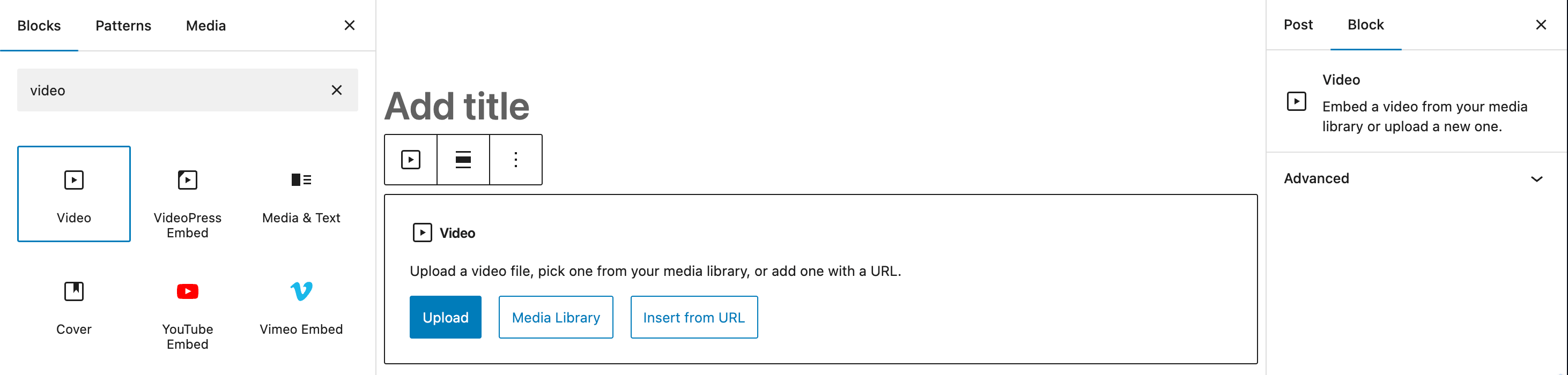
Adding the video block
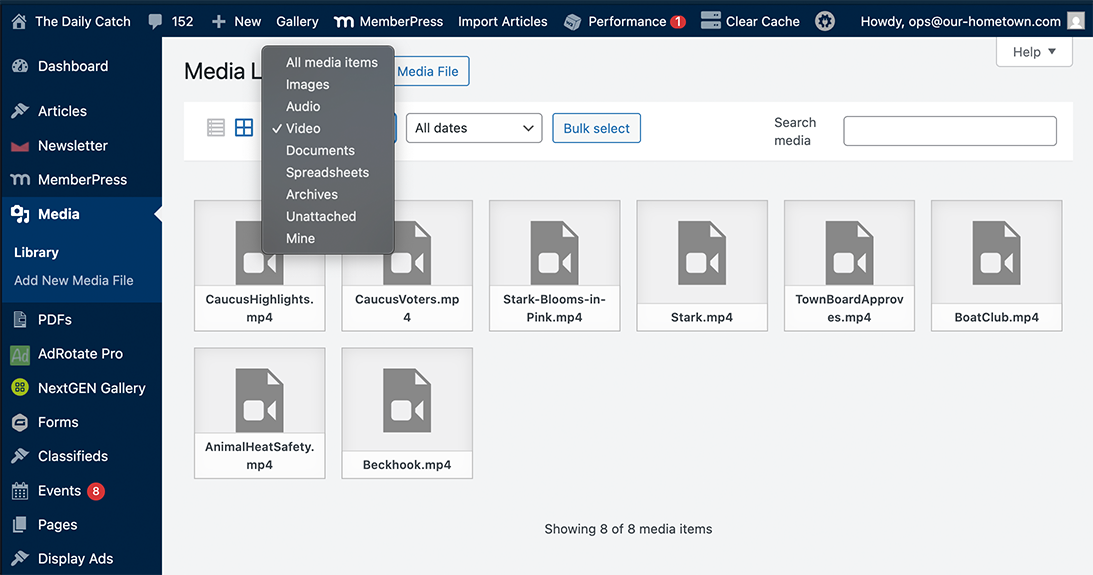
Video Content in the Media Library
Mobile Workflow
Our platform is fully mobile-ready. You can capture video on a smartphone and upload it directly to an article via your mobile browser. Ensure the file meets the size and naming requirements before uploading from your device's gallery.
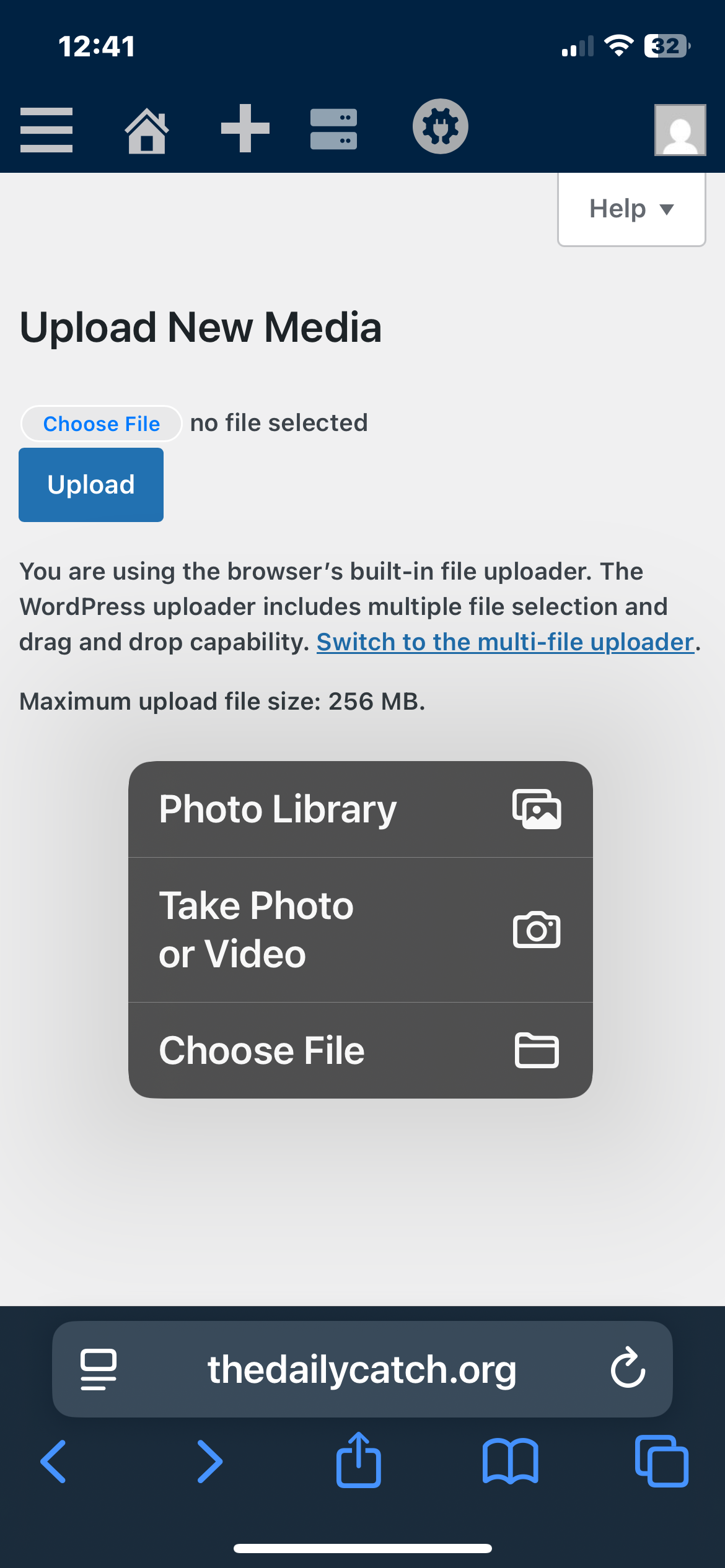
Mobile Video Upload (Safari on iOS)
Method 2: Third-Party Video Embedding
If your video is hosted on an external platform, you can embed it using a dedicated block or a direct link. This is recommended for long-form content to preserve site storage and performance.
Option A: The YouTube Block (Recommended)
For YouTube content, use the dedicated block to ensure the player is responsive and correctly formatted.
- In the Block Editor, click the (+) icon and search for the YouTube block.
- Paste the URL of the YouTube video into the input field.
- Click Embed.
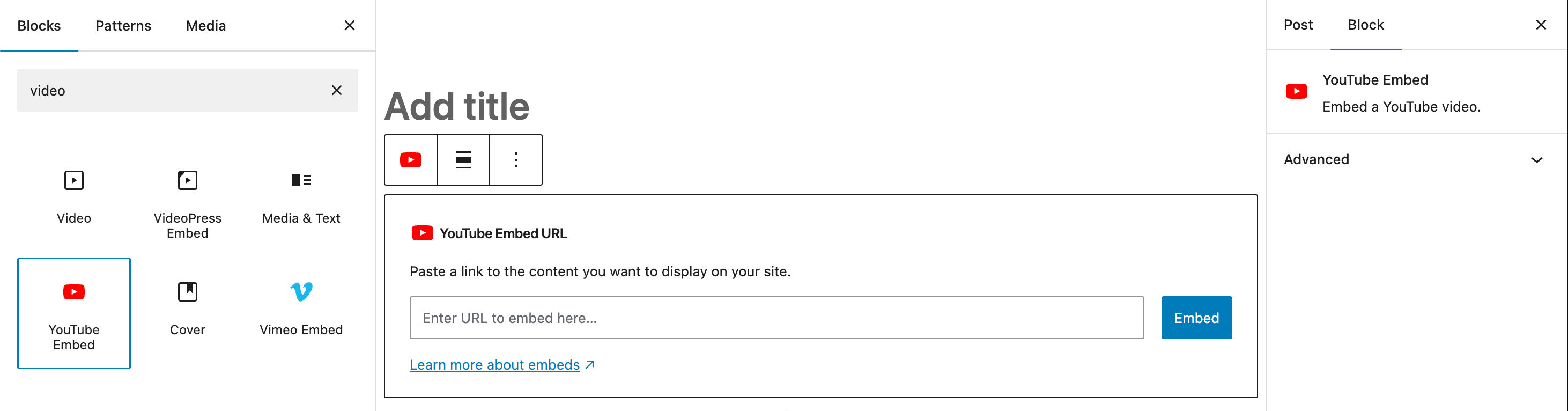
Adding the YouTube Block
Option B: Automatic Embedding (URL Pasting)
WordPress has built-in support for major video platforms (YouTube, Vimeo, etc.).
- Copy the URL of the video from your browser’s address bar.
- Paste the URL directly into the editor on its own line.
- The editor will automatically convert the link into a live video player.
Option C: Custom HTML or Classic Editor
If you are using the Classic Editor or a hosting provider that does not support automatic embedding, you must use an embed code.
- Copy the Iframe or HTML embed code from the host site (usually found under a "Share" button).
- In the Block Editor: Add a Custom HTML block and paste the code.
- In the Classic Editor: Switch from the "Visual" tab to the "Text" tab and paste the code exactly where you want the video to appear.
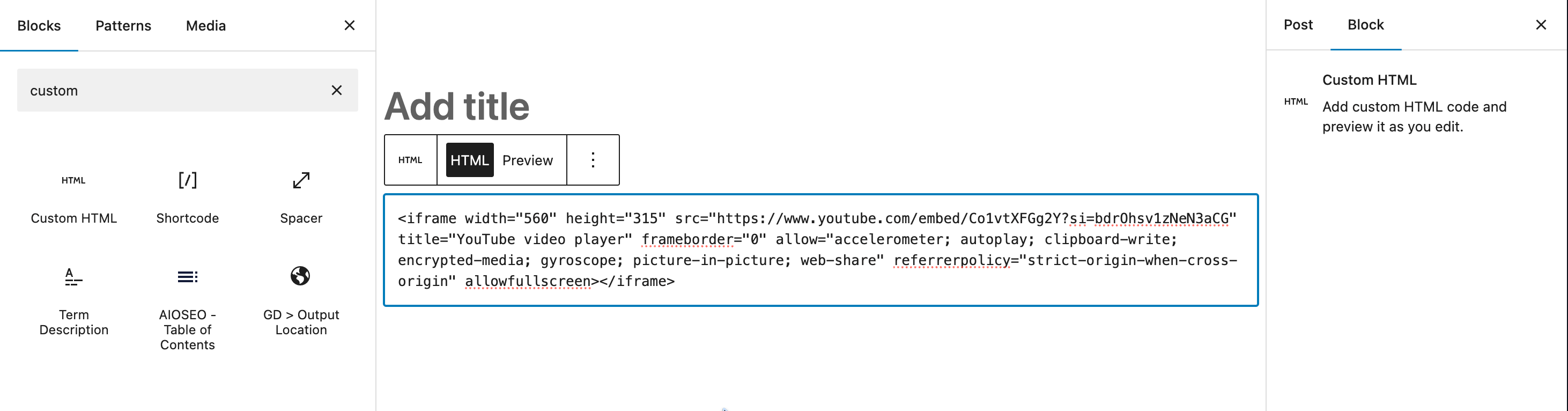
Custom HTML Block for Video embed
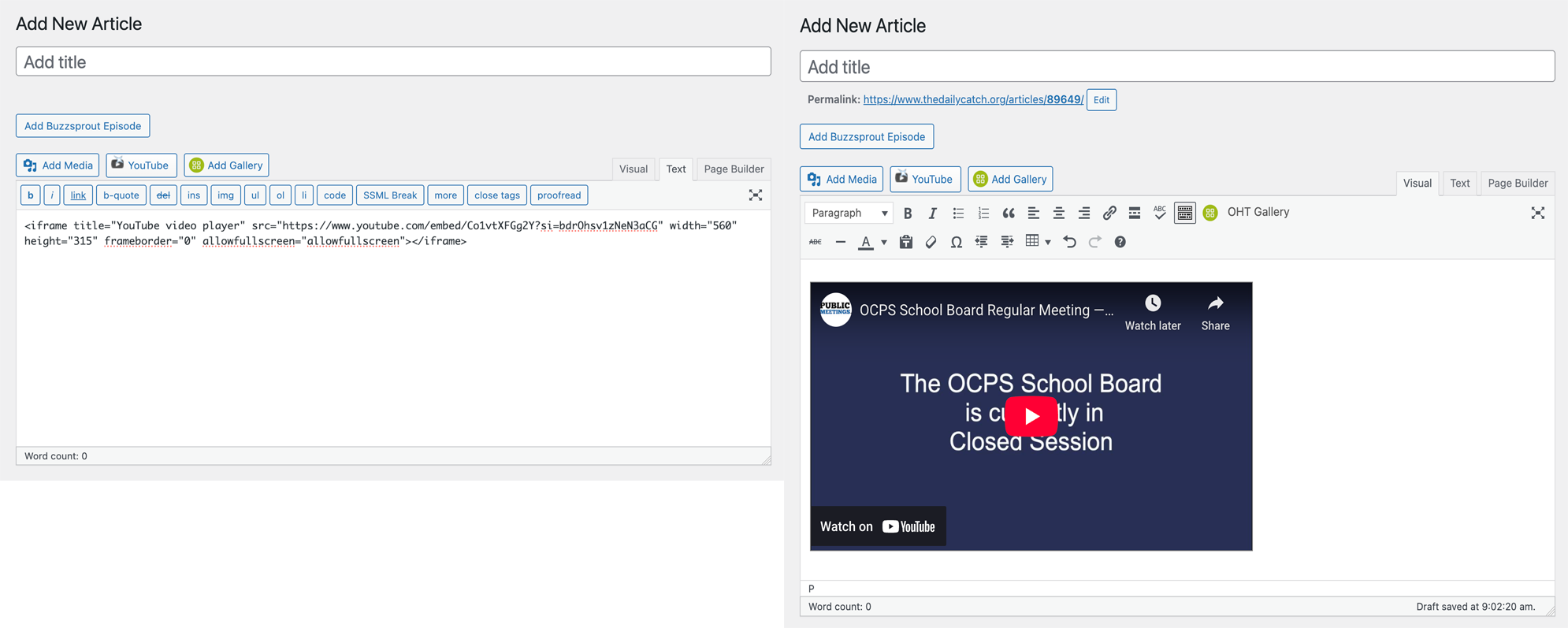
Classic Editor Video Embed
Best Practices
- Storage Management: Use direct uploads for short, high-impact clips (e.g., sports highlights, 30-second interviews). For full-length meetings or documentaries, we recommend hosting on YouTube and embedding the link.
- Accessibility: To assist users with visual or hearing impairments, consider adding a brief text summary or transcript immediately below the video block.
- Advertising: Direct video uploads can also be used within articles to showcase local video advertisements, such as property walkthroughs for realtors or vehicle showcases for local dealerships.